Partner at Charbonnet Law Firm LLC
Practice Areas: Car Accident, Personal Injury
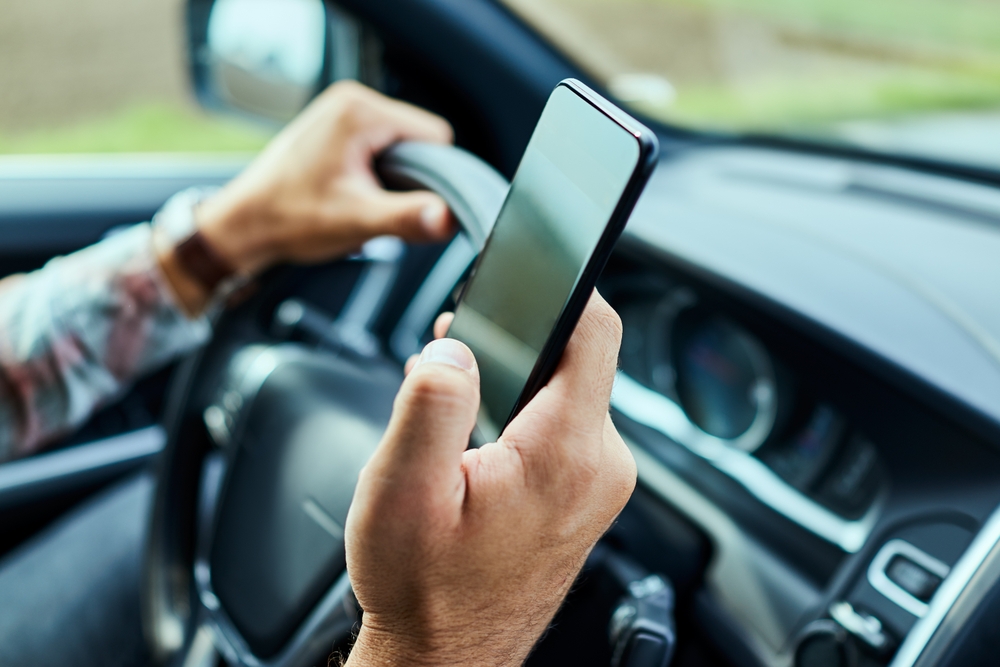
Louisiana’s hands-free driving law is now fully enforceable. Under House Bill 519, passed as Act 519 of the 2025 Regular Session, the state updated La. R.S. 32:300.5 to restrict drivers from holding or using a cell phone while driving on public roads.
The law first took effect on August 1, 2025. From then through December 31, 2025, officers could issue warnings only. Full enforcement began on January 1, 2026, so drivers can now be fined for covered handheld phone use.
This change can matter after a crash. If the other driver received a citation for holding or using a phone, that record may support a distracted driving claim. It does not prove the entire case on its own, but it can help show that the driver violated a traffic safety law near the time of the crash.
If you were hurt in a distracted driving crash, a New Orleans car accident lawyer can review whether a hands-free citation, phone records, witness statements, or crash-scene evidence may help prove fault.
La. R.S. 32:300.5 restricts handheld phone use while driving on Louisiana public roads. The law still allows hands-free technology, emergency use, and phone use when the vehicle is lawfully stationary.
The main rule states:
“No person shall operate a motor vehicle upon any public road or highway in this state while physically holding or supporting, with any part of the body, a wireless telecommunications device, except as otherwise provided in this Section.”
— La. R.S. 32:300.5, as amended by HB 519 / Act 519 of 2025
In simple terms, the issue is whether the driver is physically holding or supporting the device. The statute includes exceptions, so the facts still matter. Operator verification against the current legis.la.gov text is recommended at publish time because Louisiana updated the statute’s codification in 2025.
The law separates handheld use from hands-free use.
Prohibited while driving:
Allowed under the statute:
A red light is not the same as being lawfully stationary. The vehicle is still part of normal traffic operation, so handheld use at a signal can still lead to a citation.
Louisiana also has a companion school-zone statute, La. R.S. 32:300.8, which separately restricts wireless device use in school zones. That law works alongside the hands-free rule and supports enhanced penalties in those areas.

The law rolled out in two stages. From August 1 through December 31, 2025, officers could stop drivers for a violation but could only issue written warnings. Beginning January 1, 2026, fines became available.
A first offense can carry a fine of up to $100. If the violation happens in a school zone or the handheld use contributed to a crash, the fine can reach $250.
That shift matters outside traffic court, too. Once a citation is issued, it becomes a documented violation tied to a specific driver, location, and date. In a later injury claim, that record may help support the argument that distraction played a role.
|
Phase or situation |
Dates |
Consequence |
| Before the law took effect | Prior to August 1, 2025 | No statewide hands-free requirement |
| Warnings-only phase | August 1 to December 31, 2025 | Written warnings only; no fines |
| Full enforcement, first offense | January 1, 2026 onward | Fine up to $100 |
| School zone or crash contribution | January 1, 2026 onward | Fine up to $250 |

A citation under La. R.S. 32:300.5 can be useful evidence in a distracted driving case. Traffic citations can help show that a driver violated a safety law at a specific time and place. In a civil claim, that may support a negligence argument, especially when the crash occurred shortly after the alleged phone use.
The citation does not decide the entire case. Fault still depends on the crash facts, witness accounts, physical evidence, timing, and any available phone or video records. But it can make the claim more concrete. Instead of arguing only that the driver was “distracted,” the injured person may be able to point to a specific statutory violation.
This can matter even more under Louisiana’s 51% modified comparative fault rule, effective January 1, 2026. In close fault disputes, evidence of handheld phone use may affect how responsibility is divided.
Generally no. The law permits handheld use only while the vehicle is “lawfully stationary,” which Louisiana interprets to mean parked or pulled over, not paused at a traffic signal. A red light is considered part of normal driving operation, so handheld use during a red-light stop can still trigger a citation under La. R.S. 32:300.5.
Hands-free use means the driver is not physically holding or supporting the phone. Examples include Bluetooth calls, voice commands, voice-to-text, mounted navigation, and speakerphone when the device is mounted.
Yes. A citation under La. R.S. 32:300.5 may be used as evidence that the driver violated a traffic safety law. It does not automatically prove liability, but it can support the negligence argument when paired with the rest of the evidence.
Yes. La. R.S. 32:300.8 prohibits wireless telecommunications device use in school zones regardless of whether a crash occurs. A driver cited in a school zone can face the enhanced fine even in the absence of any collision or injury.
Louisiana’s prescriptive period for personal injury claims is 2 years from the date of the crash under Act 423 of 2024. The change applies to delictual actions arising on or after July 1, 2024, including distracted driving injury claims.
Louisiana’s hands-free law now carries real enforcement consequences. Since January 1, 2026, officers have been able to issue fines for handheld phone use covered by La. R.S. 32:300.5. The statute still allows hands-free technology, emergency use, and phone use when a vehicle is lawfully stationary.
For injury claims, the citation record may matter. It can help show that a driver violated a safety law, especially when the crash facts suggest distraction. It does not prove the case on its own, but it can strengthen the evidence of fault.
If you were hit by a distracted driver in New Orleans or Metairie after January 1, 2026, the attorneys at Charbonnet Law Firm, L.L.C. have represented Louisiana crash victims since 1967.
The firm can review whether a hands-free law violation affects your claim, how comparative fault may apply, and what evidence should be preserved.

With over 50 years of legal experience serving families in the New Orleans area and surrounding Louisiana communities, our firm takes pride in providing clients with personalized legal services tailored to individual needs.