Partner at Charbonnet Law Firm LLC
Practice Areas: Life Insurance Disputes
The first few minutes after a crash can feel confusing. People may be hurt. Traffic may be moving around you. Cars may need to be moved. Witnesses may leave before anyone gets their names.
At the same time, some of the most important evidence is usually right there at the scene.
Skid marks fade. Broken glass gets cleared. Vehicles get towed. A witness who remembers the crash clearly today may forget key details a week later. What you collect at the scene, or fail to collect, can affect how your claim is handled later when the insurance company starts questioning what happened.
You do not need to do everything perfectly. If you are injured, your health comes first. A New Orleans car accident attorney can help later. But if you can act safely, a few simple steps in the first half hour can protect your health, your rights, and your claim.
The steps below apply when you are physically able to move around and document the scene. If you are badly hurt, stay where you are and wait for medical help. Evidence can be handled later.
Your first call should be 911. That call does two important things. It sends medical help to the scene if anyone is hurt and creates a record of the crash right away.
Tell the dispatcher:
Stay on the line until the dispatcher tells you it is okay to hang up.
If the crash happens inside New Orleans, the New Orleans Police Department usually responds and prepares the crash report. Stay at the scene unless you need emergency medical care.
When officers arrive, they will assess the scene, speak with drivers and witnesses, and document their findings. That report can become one of the most useful records in your case. It may include vehicle positions, statements from people involved, road conditions, and the officer’s view of what likely happened.
Memories can change quickly after a crash. A police report filed close to the time of the accident provides your claim with a dated record that is harder to dispute later.

Reporting a crash is not only a smart step; it’s essential. In many cases, it is required by law.
Louisiana Revised Statute 32:398 says that a driver involved in a crash must immediately notify law enforcement if the crash causes injury, death, or property damage over $500.
If the crash happens inside an incorporated city like New Orleans, the report goes to the local police department. Outside a city, it goes to the nearest sheriff’s office or state police.
The $500 threshold is low. Most real collisions go over it once vehicle repairs, towing, or medical care are involved.
“The driver of a vehicle involved in a crash resulting in injury to or death of any person or property damage in excess of five hundred dollars shall… immediately give notice of the crash to the local police department.”
The simple rule is this: if the crash is more than a minor bump, call the police and document it.
Failing to report a crash when required by law can create problems. It can also make your insurance claim harder because there is no official record from the scene.
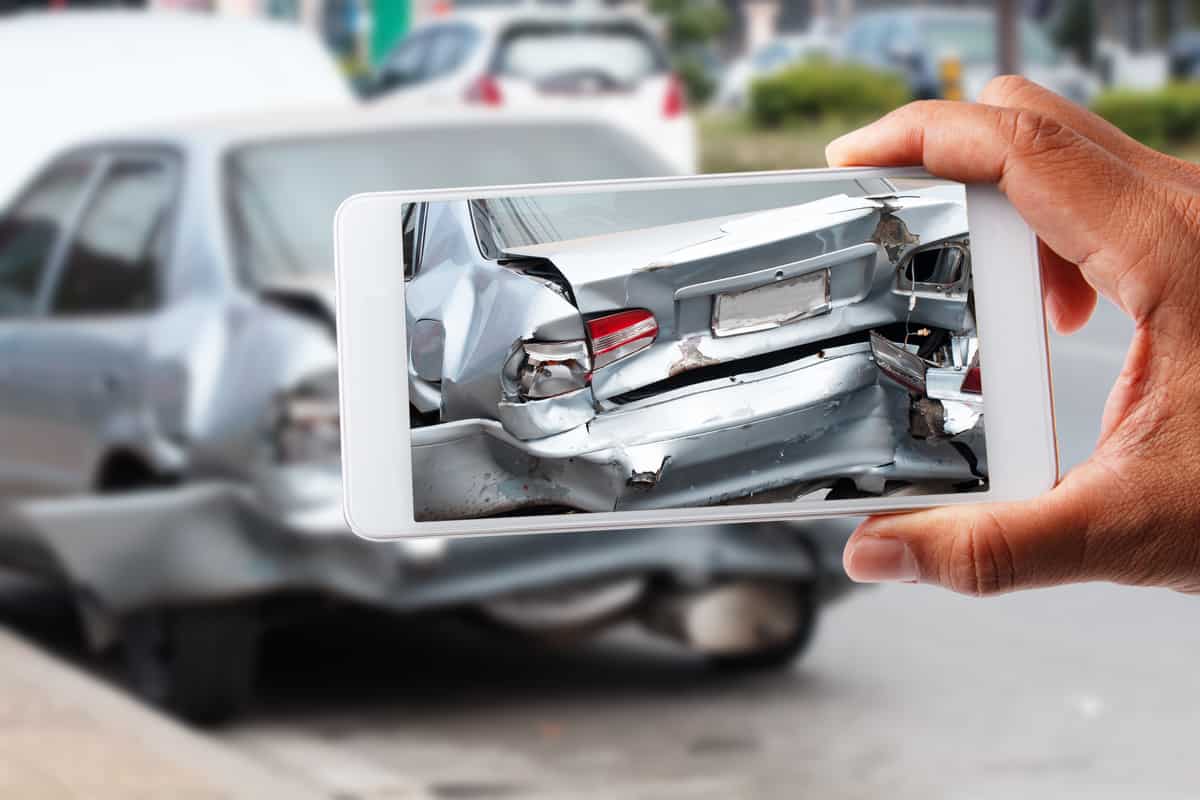
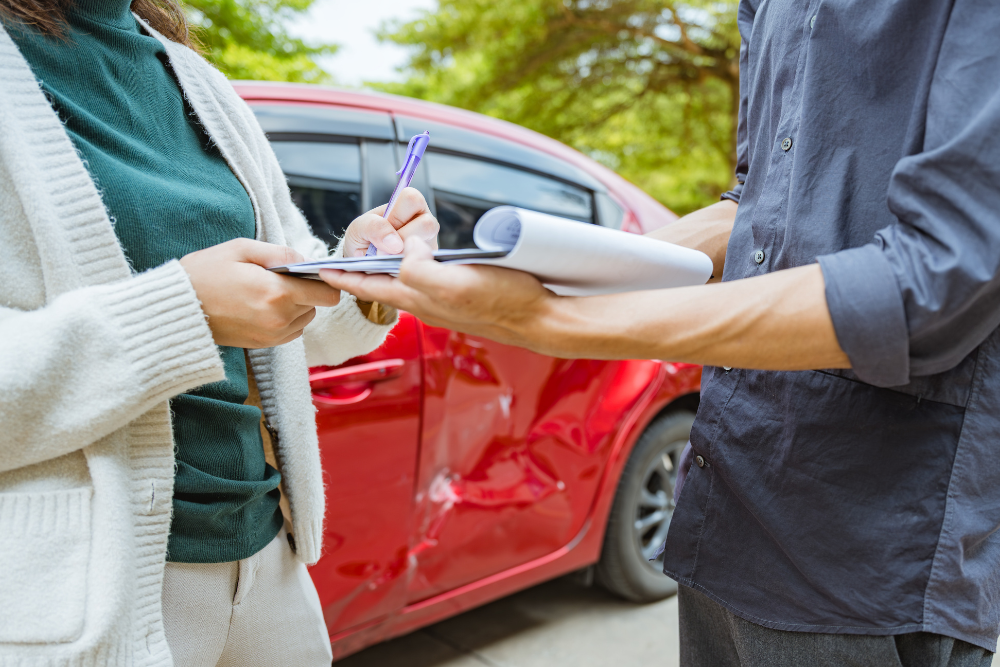
If you are not seriously hurt and the area is safe, start taking photos. Use your phone and take more pictures than you think you need. You can always delete extras later, but you cannot go back and recreate the scene.
Take photos of:
Take both wide shots and close-up photos.
Wide photos show the full scene. Close-up photos show the damage and details. Together, they help explain what happened.
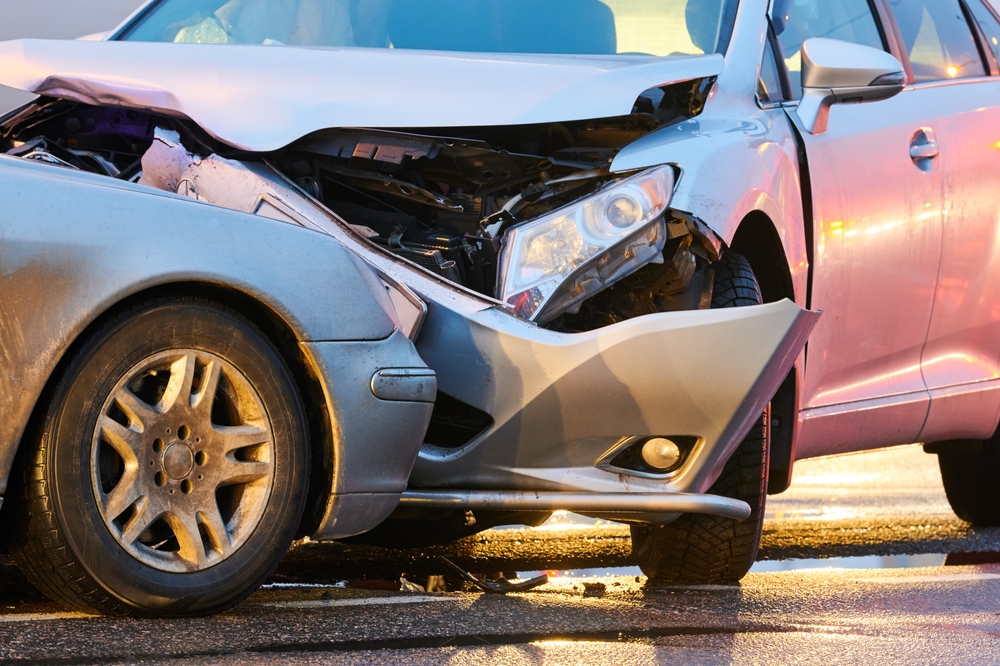
For example, a close photo of a smashed bumper shows damage. A wider photo showing a dark, wet road with poor lighting tells a fuller story. That kind of detail can matter when the insurance company later questions the fault.
Exchange information with every other driver involved. Get the other driver’s:
If they allow it, take photos of their driver’s license, insurance card, and license plate. This helps avoid mistakes. Handwritten notes can be hard to read later, especially when everyone is stressed.
Be careful with what you say while exchanging information. You can be polite and calm without explaining the crash or taking blame.
Do not:
A simple “Are you okay?” is fine. A statement like “I’m sorry, I didn’t see you” can be used against you later.
Stick to the facts. Exchange information and let the police report, photos, witnesses, and the insurance investigation handle fault.
Witnesses can be very helpful, but they usually do not stay long. If someone saw the crash, ask for their name and phone number before they leave.
If they are willing, also ask where they were standing or driving when they saw it happen.
A neutral witness can make a big difference when the drivers disagree. Insurance companies often give more weight to someone who was not involved in the crash and has no reason to favor either side.
If you miss a witness at the scene, it does not mean your case is over. A lawyer may still be able to find nearby workers, residents, business owners, or drivers who saw what happened. But it is always easier when you collect the witness’s contact information right away.
Video can be some of the strongest evidence in a car accident claim. After the crash, look around for cameras nearby.
Look for:
If a nearby business may have video, ask who handles camera requests. Write down the business name, address, camera location, date, and time of the crash.
If someone lets you view the footage but will not give you a copy, ask if you can record your phone’s screen as a temporary backup.
A lawyer can later send a formal preservation letter to the owner, requesting that they not delete the footage. But that only helps if the video still exists. The sooner you identify possible footage, the better.
Do not post about the crash on social media.
It may feel natural to vent, update friends, or explain what happened, but posts can be used against you.
Insurance companies and defense lawyers often look at public social media accounts. A single photo, comment, or check-in can be twisted.
For example:
Even harmless posts can create problems.
Set your accounts to private and avoid discussing the accident online until the claim is resolved. Do not post photos of the crash, comments about your injuries, or updates about the insurance claim.
See a doctor as soon as possible, even if you think you are okay.
Some injuries do not show up right away. Concussions, soft-tissue injuries, back injuries, neck injuries, and internal injuries can take hours or days to become obvious.
Adrenaline can also hide pain at the scene. You may feel fine at first and much worse the next morning.
Getting medical care protects your health first. It also creates a dated medical record close to the crash. That matters because insurance companies often question whether an injury was really caused by the accident.
If you wait three weeks before seeing a doctor, the adjuster may argue that something else caused your pain. A prompt exam makes that argument harder.
Keep copies of:
Your memory will fade faster than you expect. Start a simple journal as soon as you can. It does not need to be long or formal. A few notes each day can help.
Write down:
Medical records show diagnoses and treatment. Your journal shows what life actually looked like after the crash.
It can explain missed sleep, trouble walking, headaches, fear of driving , and daily limitations that may not always appear in a medical chart.
A dated journal can support the pain and suffering part of your claim. It also helps you remember details months later, when the insurance company or a lawyer asks specific questions.
| Step | What to Do | Why It Matters |
| Call 911 | Report the crash and request medical help | Creates a dated record and helps meet R.S. 32:398 |
| Photograph the scene | Capture vehicles, positions, injuries, signs, road conditions, and weather | Preserves details that may disappear quickly |
| Exchange information | Get names, contact details, license plates, and insurance information | Identifies the people and policies involved |
| Get witnesses | Collect names and phone numbers | Independent accounts can support your version |
| Find footage | Look for business, doorbell, traffic, or dash cameras | Video can strongly prove how the crash happened |
| See a doctor | Get examined and keep records | Connects your injuries to the crash |
| Keep a journal | Track pain, treatment, missed work, and daily impact | Helps show how the crash affected your life |
Good documentation does more than help tell the story. It can affect how fault is assigned.
Louisiana uses fault percentages in injury cases. Under Civil Code article 2323, each party may be assigned a percentage of responsibility. Photos, witness statements, police reports, medical records, and video can all impact that percentage.
The crash date counts now, too.
For crashes on or after January 1, 2026, Louisiana uses modified comparative fault with a 51% bar under Article 2323, as amended by HB 431 in 2025.
That means:
For crashes before January 1, 2026, the older pure comparative fault rule applies.
Say your damages are $100,000.
If strong evidence keeps your share of fault at 20%, your recovery would be reduced to $80,000.
But if weak evidence allows your fault share to rise to 55%, a post-2026 crash would leave you with $0 under the new 51% bar.
Before 2026, those same facts would still have allowed a reduced recovery of $45,000.
That difference shows why scene evidence matters so much.
Louisiana is also an at-fault state and does not use PIP in the same way some other states do. In most cases, your claim is made against the at-fault driver. If that driver has no insurance or not enough insurance, your own uninsured or underinsured motorist coverage may become important.
Yes, if the crash is serious enough. Louisiana law, R.S. 32:398, requires a driver to notify police immediately after a crash that causes injury, death, or property damage exceeding $500. In New Orleans, that usually means calling NOPD. A police report also gives your claim a neutral record of what happened.
Photograph the vehicles from several angles, their resting positions, visible injuries, skid marks, debris, broken glass, and deployed airbags. Also, take photos of traffic signs, traffic lights, lane markings, weather, and road conditions. Use both wide shots and close-ups to keep the full scene clear.
Do not accept your fault, apologize in a way that sounds like blame, or guess about what caused the crash. A casual statement like “I’m sorry” or “It was my fault” can be used later to reduce your claim. Exchange information, stay calm, and let the investigation decide fault.
You may still have a claim. If you were hurt, shaken, or taken to the hospital, evidence can often be gathered later. A lawyer may be able to find witnesses, request footage from nearby cameras, obtain the police report, and review any photos or records that exist. Scene evidence helps, but missing it does not automatically end your case.
For crashes on or after July 1, 2024, you generally have two years from the date of injury to file a lawsuit under Louisiana Civil Code article 3493.1. Crashes before that date may fall under the older one-year deadline. Because deadlines can affect your rights, it is better to ask early than wait.
Car accident claims are built on details. The insurance company will look at who caused the crash, how serious the injuries are, and whether the records support what you are saying.
The documentation you gather early becomes the foundation of the claim. It can affect fault, damages, settlement value, and whether the insurance company has room to argue against you.
Louisiana’s fault rules changed in 2026, and the filing deadline matters as well. If a crash has caused serious injuries or disrupted your life, it is better to get advice before evidence disappears or time runs out.
At Charbonnet Law Firm, our attorneys have represented injured people across New Orleans for three generations. The consultation is free. Call (504) 888-2227 to discuss what happened and the next steps.

With over 50 years of legal experience serving families in the New Orleans area and surrounding Louisiana communities, our firm takes pride in providing clients with personalized legal services tailored to individual needs.