Partner at Charbonnet Law Firm LLC

Practice Areas: Car Accident, Personal Injury
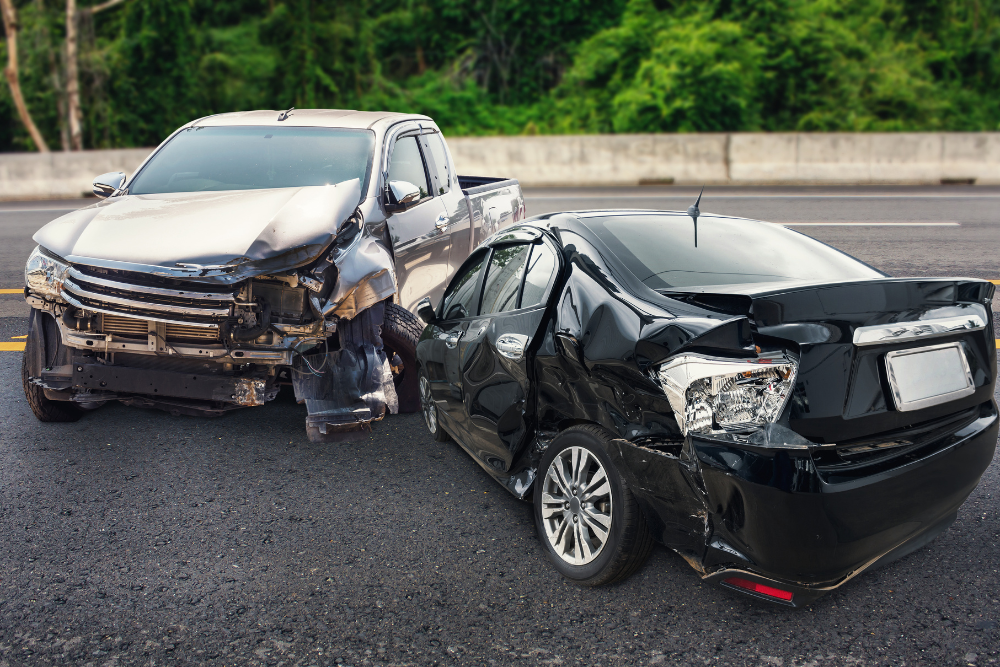
A lane-keeping system drifts, an automatic brake fires for no reason, or “self-driving” mode misidentifies a Claiborne Avenue work zone, and suddenly nobody at the scene can say whose fault the wreck really was.

Was it the person in the driver’s seat? The company that wrote the software? Both? The honest answer is that it depends on the facts, and the facts in these cases live inside the car’s own data.

Most people leave a partial-automation crash thinking the machine was to blame, but a good car accident lawyer in New Orleans will test that before any claim is signed away. Fault is rarely one name. It is usually a percentage split, decided after the vehicle logs are reviewed.

This guide explains the split between driver assistance and true autonomy, when the driver may still be liable, when the manufacturer may face a Louisiana product-liability claim, and the deadline that can decide whether the case is heard.

Key Takeaways

  • The fault lies in how the system was used, whether it failed, and how Louisiana allocates blame among the parties involved.
  • Most driver-assist features still require constant human supervision, so the driver may retain some of the fault even when the technology served its role.
  • An automaker may face a Louisiana product liability claim if a design flaw, software defect, or missing warning resulted in a crash.
  • Vehicle data often decides that question, so event records, system logs, and telemetry should be preserved early.
  • For most Louisiana crashes on or after July 1, 2024, you have two years to file suit. Miss that deadline, and the claim is usually gone.

What Determines Fault When an Automated Vehicle Feature Causes a Crash?

The Fault lies in three things working together: how the system was used, whether it malfunctioned, and how the law allocates accountability among the parties. Louisiana does not automatically assign fault for a crash to one person.

It assigns a percentage of fault to everyone involved, meaning a driver, a manufacturer, and even a repair shop can each carry a share. The crash gets reconstructed from the data, not from a gut read at the curb.

That percentage approach comes straight from Louisiana Civil Code article 2323, which directs courts to determine “the degree or percentage of fault of all persons causing or participating in the injury.” You can read the article on the Louisiana legislature’s website.

A two-car fender-bender usually has one clear villain. A crash involving software, sensors, and a half-paying-attention human almost never does.

Fault in autonomous vehicle feature crash

Does Using Driver-Assistance Technology Shift Responsibility Away From the Driver?

Usually not. Most systems sold today still require an alert human behind the wheel, so the driver retains responsibility even while the car steers or brakes itself. Treating a Level 2 feature like a chauffeur is the misstep that puts fault back on the person, not the machine. The label on the box rarely matches what the law expects of you.

The Difference Between Driver Assistance and True Autonomy

Assisted driving systems, the ones marketed as adaptive cruise, lane centering, or “autopilot”-style features, are generally Level 2 technology. They can steer and adjust speed, but they assume you are watching the road and ready to take over in a heartbeat.

The National Highway Traffic Safety Administration is blunt about this: at Level 2, the human is still driving and must supervise the system at all times.

Truly autonomous systems sit at higher automation levels and can, in theory, handle the whole driving task without a person. Louisiana law even defines the category.

Under La. R.S. 32:1, “automated technology” means technology equipped to drive the vehicle in high or full automation without a human supervisor, a definition the state’s transportation department lays out alongside its autonomous-vehicle framework.

Cars like that are not what most New Orleanians are driving to work. The gap between the marketing and legal definitions is where many of these matters turn.

When Driver Negligence Still Applies

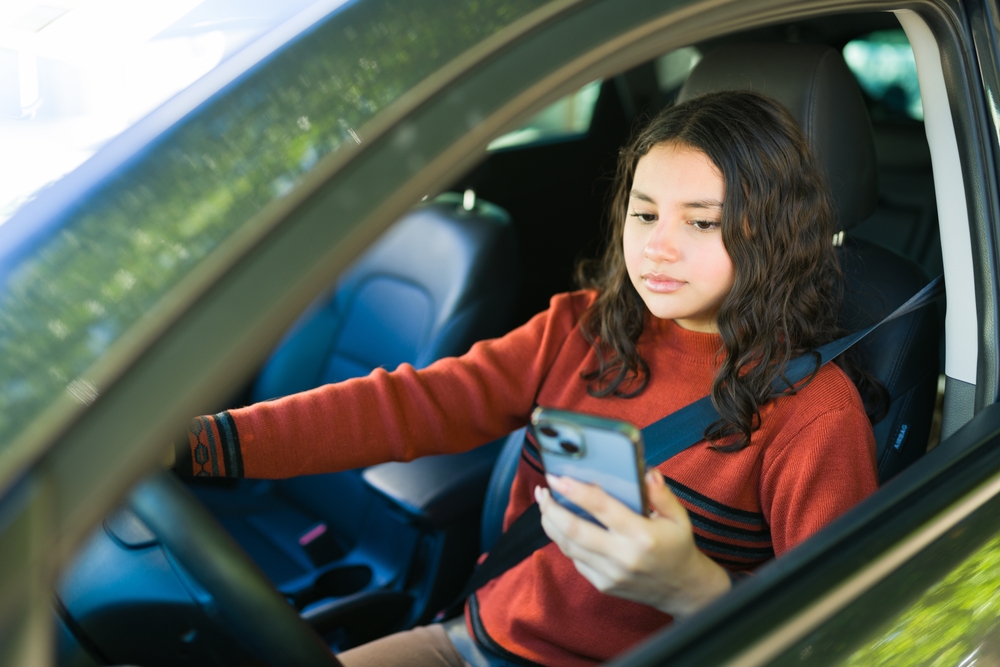
A driver can share fault by misusing the feature: ignoring a “take over” alert, watching a phone instead of the road, or running the system somewhere it was never meant to operate, like a flooded street or a torn-up construction stretch.

Courts ask a plain question. Would a reasonable, attentive driver have grabbed the wheel? If yes, and this one did not, fault follows the human. Automation does not excuse inattention.

When Can the Vehicle Manufacturer Be Held Liable?

A manufacturer can be liable when something about the vehicle itself was unreasonably dangerous, and that flaw helped cause the crash. In Louisiana, that claim is governed by the Louisiana Products Liability Act (La. R.S. 9:2800.51 and following), which is the exclusive route for suing a maker over a defective product. It is a different theory from ordinary driver negligence, with its own elements and its own proof.

The Four Ways a Product Claim Arises

Under La. R.S. 9:2800.54, a product is “unreasonably dangerous” in only four ways: a construction or composition defect (this unit came out wrong), a design defect (the whole line is flawed and a safer feasible design existed), an inadequate warning, or a breach of an express warranty.

The claimant must show that the defect existed when the vehicle left the maker’s control and that the car was being used in a reasonably foreseeable manner. You can review the statute on the legislature’s site. Software counts. A perception system that consistently misreads stopped traffic can be a design problem, not simply a glitch.

Updates, Warnings, and Recognized Limits

Modern vehicles can be updated after purchase wirelessly. If an automaker knew about a dangerous flaw and failed to fix it or warn drivers, that can support a failure-to-warn or design claim.

The same applies to limits hidden in a manual that few people read. A clear warning, such as “do not use on undivided highways,” can carry weight. A vague warning may not. If the risk was predictable and the warning was too thin, the automaker may share the blame.

Vehicle manufacturer liability in autonomous crash

How Does Louisiana Law Split Fault in These Crashes (and What Changed in 2026)?

Louisiana divides fault by percentage, but the rule changed in 2026, so your crash date matters. Many guides miss this and state that today’s law as if it always applied. But it did not, as Louisiana had used pure comparative fault before January 1, 2026. You could still recover damages, reduced by your share of blame, even if you were mostly at fault.

For crashes on or after that date, Article 2323, as amended by HB 431 (2025), adds a 51% bar: if you are 51% or more at fault, you recover nothing at 50% or less, you can still recover a reduced amount.

Say a software defect and a distracted driver both cause a car to be totaled, and the damage is $200,000. If a jury assigns 40% fault to the driver and 60% to the manufacturer, the driver recovers $120,000.

If we change the driver’s fault to 55%. Before 2026, they still recovered $90,000. For crashes on or after January 1, 2026, the 51% bar wipes out recovery. Same wreck, same injuries, different result because of the date and fault split. That is why the vehicle data matters.

What Evidence Decides Fault in an Autonomous-Feature Crash?

The evidence is mostly digital. These cases are won or lost on the vehicle’s own records, which is why conserving them quickly is a task in itself.

Event recorders, system logs, and telemetry can show whether the feature was on, when it warned or shut off, and how the car behaved in the final seconds. Scene evidence still matters, but the computer timeline often settles the fight.

Physical evidence from the crash scene is important, but the timeline on the computer often settles the argument as well.

Why the Logs Matter

A log that shows the system handed control back two seconds before impact tells a very different story from one that shows the human had 10 full seconds to react and did nothing. Timing is everything.

Did the car warn, and did the driver have a fair chance to respond? Those answers come from the data, and the data can be overwritten or lost if no one steps in to secure it. Lawyers handling these claims usually send a preservation demand early so the records are not gone by the time anyone asks for them.

Can More Than One Party Be Responsible for the Same Crash?

Yes. Shared liability is the norm in these cases, not the exception. A driver can misuse a feature at the same moment a design limitation contributes, and Louisiana’s percentage system is built to split fault exactly that way.

The web can stretch further: a repair shop that botched a sensor calibration, a software developer, or a fleet owner that skipped a safety update can each pick up a slice. Understanding how liability gets allocated in a car accident is the first step in finding every party who actually contributed.

Common Fault Scenarios

Scenario Likely responsible party Why it matters
Driver ignores a “take over” alert Driver Failure to supervise the system
Software defect triggers sudden braking Manufacturer Potential design or construction defect (LPLA)
Sensor left blocked or miscalibrated Driver or repair shop Negligent upkeep or faulty service
Feature used outside its intended conditions Driver Misuse of the technology
Known flaw left unpatched after notice Manufacturer Failure to warn or correct

How Are These Cases Different From Ordinary Car Accidents?

They add a layer of technical and product analysis on top of the usual negligence questions. A standard wreck focuses on driver behavior. An autonomous-feature case involves software performance, sensor data, and engineering decisions, which means that experts and the right discovery requests carry real weight.

The law is still catching up to the technology, so courts are working through fresh questions about where human responsibility ends and a machine’s begins. More moving parts, more potential defendants, and a heavier reliance on data than almost any other crash claim.

Frequently Asked Questions

Who is legally liable if an automated feature causes a crash?

It depends on how the feature was used, whether it malfunctioned, and what the data shows. Under Louisiana’s comparative-fault system, responsibility can be split among the driver, the vehicle’s manufacturer, and others (such as a repair shop), each assigned a percentage of fault based on their role in the crash.

Can a car manufacturer be sued for an autonomous-vehicle crash?

Yes, through the Louisiana Products Liability Act. If a design defect, a construction or software flaw, an inadequate warning, or a broken express warranty made the vehicle unreasonably dangerous and helped cause the crash, the maker can be liable, provided the car was used in a reasonably anticipated way.

Are drivers still responsible when using driver aid features?

Usually, yes. Most systems on the road are Level 2, which by design require the human to supervise and be ready to take over. A driver who ignores warnings, looks away, or uses the feature outside its limits can keep a share of the fault even when the system also misbehaves.

How does comparative fault work in Louisiana, and did it change?

Before January 1, 2026, Louisiana used pure comparative fault. You could still recover damages, reduced by your share of blame, even if you were mostly at fault. For crashes on or after that date, a 51% bar applies: 51% or more fault means you recover nothing, while 50% or less still allows a reduced recovery.

What evidence is used in autonomous-feature crash cases?

Mostly digital records from the vehicle itself: event data recorders, system engagement logs, and telemetry that show when the feature was active, when it alerted the driver, and how the car reacted. Scene photos, witness accounts, and the police report round it out. Preserving the data early is critical.

Get Your Free Consultation

Talk to a New Orleans Car Accident Attorney

A crash involving a driver-assist or self-driving feature is one of the harder claims to sort out, because the proof is buried in data that can disappear, and the fault split decides everything. The worst time to start asking questions is after the two-year deadline has run, as explained in our piece on Louisiana’s two-year filing. For most crashes since July 1, 2024, the window is 2 years; for older ones, it is 1 year.

At Charbonnet Law Firm, our attorneys have represented injured people across New Orleans for three generations, and consultations are free, so there is no cost to getting a clear read on who was actually at fault and what your options are. Have the logs preserved before they are gone. Reach us at (504) 888-2227 to talk through your crash while there is still time to act.

With over 50 years of legal experience serving families in the New Orleans area and surrounding Louisiana communities, our firm takes pride in providing clients with personalized legal services tailored to individual needs.

  • “I walked in as a client and walked out as a friend. If you are good at what you do, you will never need expensive ads to prove it. Good outshines the rest and in volatile times such as now always go for the good and at Charbonnet Law Firm you will be treated as humans and not just a case file. It’s my word of mouth endorsement and I approve this message.”

    A. Bajaj

  • “It’s easy to get caught up in lies. These days it’s hard to weed out good from bad. The best endorsement is what comes from people, not the lawyers’ own endorsements, paid celebrity endorsements or actors telling you they made millions. Charbonnet law firm has no expensive ads because they have happy clients. I am one of them!”

    J. Kelly

  • “If I had to sum it up in short Charbonnet Law Firm has a team that treats everyone with respect and esteem. Kindness is apparent as soon as you walk into the office, don’t be just a case number! I am not just saying it I am a client too!”

    B. Smith

  • “Best Firm in New Orleans. Great service. These guys treated me like family whenever I got in a tight situation. Clean office and great location in the Metairie area.”

    Q. Lee

SCHEDULE A FREE
Consultation

Home contact Form