Partner at Charbonnet Law Firm LLC
Practice Areas: Car Accident, Slip-and-Fall, Work-related Injury
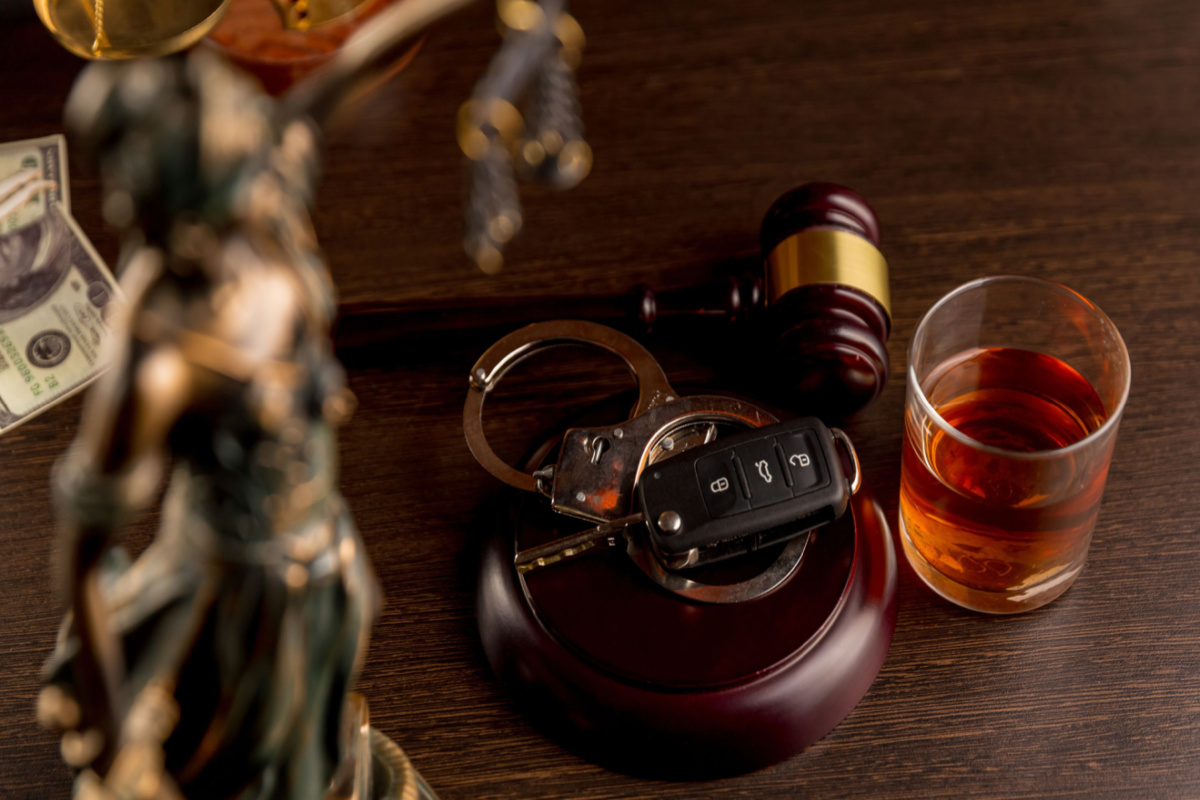
A drunk driver hit you, the police arrested him, and it feels like the case should be over. Usually, it is not that simple.
An arrest answers one question: Did the driver break the criminal law? Your injury claim answers another: who pays for your medical bills, lost income, pain, and other losses? Those cases move on separate tracks, with different rules and different proof.
A DUI conviction can help your claim, but it does not automatically put money in your pocket. You still have to prove the crash caused your injuries and show what those injuries cost you. That is where a New Orleans car accident lawyer starts with the proof, not the assumption.
This guide explains how criminal and civil DUI cases differ, when a drunk driver can be held liable, what evidence matters, whether a bar can be sued, what damages may be available, and how Louisiana’s deadline and fault rules affect the case.
A drunk-driving crash often creates two cases.
The criminal case belongs to the state. Prosecutors decide whether to charge the driver, and the result may include jail time, fines, probation, or a suspended license.
The civil case belongs to you. Its purpose is not to punish the driver for breaking the law. Its purpose is to recover the money the crash cost you.
The proof standard is different, too. In criminal court, the state must prove guilt beyond a reasonable doubt. In a civil claim, you usually need to show it is more likely than not that the driver caused your harm.
That lower civil standard matters. You can still recover compensation even if the criminal case is delayed, reduced, or dismissed. A conviction helps, but it does not replace the work of proving your injuries, treatment, lost wages, and other damages.

Drinking makes a driver dangerous, but liability still depends on how the crash happened.
If the drunk driver ran a red light, crossed the center line, rear-ended you, or failed to yield, the case is much clearer. But if another driver caused the wreck, fault can still be shared, even when one person was intoxicated.
Louisiana looks at the conduct that caused the collision. The blood alcohol number matters, but it is not the whole case.
Two things have to line up: The driver was impaired, and that impairment, or another careless act, caused the crash and your injuries.
An arrest is a strong starting point. It is not the finish line.
Louisiana assigns fault by percentage under Civil Code article 2323. Your share of fault can reduce what you recover, and since 2026, it can also wipe out the claim.
Before January 1, 2026, Louisiana used pure comparative fault. You could still recover damages even if you were mostly to blame, with your award reduced by your share.
For crashes on or after January 1, 2026, Louisiana uses a 51% bar. If you are 51% or more at fault, you recover nothing. At 50% or less, you can still recover, but your award is reduced by your share.
Supposedly, if your damages are $100,000, the drunk driver is 90% at fault, and you are 10%, you recover $90,000 under either rule. But if a jury deems you at 55% fault for turning left across traffic and the crash happened in 2026, you won’t recover anything. Drunk driving still matters, but the fault partition and the crash date define the payout.
To hold a drunk driver responsible, you need proof of both impairment and causation. The criminal case may provide some of it, but your civil claim should not depend on a conviction alone.
Evidence that often matters includes:
The stronger the record, the harder it is for an insurer to deny fault, downplay impairment, or argue that your injuries came from somewhere else.
Usually, no.
Some states allow “dram shop” claims against a bar or restaurant that overserved a drunk customer. Louisiana mostly does not. Under Louisiana Revised Statute 9:2800.1, the law generally treats drinking alcohol, not serving it, as the legal cause of the injury.
That rule protects most bars, restaurants, and social hosts from drunk-driving lawsuits.
There are narrow exceptions, such as forcing someone to drink or falsely saying a drink contains no alcohol. In most cases, though, the claim runs against the drunk driver and that driver’s insurer, not the place that served the drinks.
A drunk-driving crash can lead to the same damages as other serious car accident claims, plus one category that is not available in most injury cases.
You may be able to recover:
Punitive damages are unusual in Louisiana. The law does not allow them in most personal injury cases. Drunk-driving crashes are one of the few exceptions, when the driver’s intoxication caused the injuries through wanton or reckless disregard for others’ safety.

A drunk-driving arrest does not guarantee a fair settlement. You still have to prove the crash caused your injuries, document every loss, and push back when the insurer tries to shift blame.
A lawyer can gather criminal records, chemical test results, police reports, footage, witness statements, and medical records before they become lost or harder to obtain. That matters even more in 2026 cases, where Louisiana’s 51% fault bar can turn a disputed percentage into the main fight.
Charbonnet Law Firm has represented injured people in New Orleans and nearby parishes for three generations. Ex results do not ensure the same effect, but getting help early can affect how the claim is made, assessed, and managed.
| Issue | Criminal DUI Case | Civil DUI Injury Claim |
| Who brings it | The state | The injured person |
| Purpose | Punish the offense | Recover money for losses |
| Proof standard | Beyond a reasonable doubt | More likely than not |
| Possible result | Jail, fines, license suspension | Compensation for injuries and damages |
| Punitive damages | Not the mechanism | Possible under article 2315.4 |
| Can both happen | Yes | Yes |
No. Intoxication is strong evidence, but fault still depends on how the crash happened. A court or insurer looks at who caused the collision, not just who had alcohol in their system.
Yes. A conviction can help prove impairment, but you still have to prove the crash caused your injuries and show your damages. The civil claim is separate from the criminal case.
Rarely. Louisiana’s anti-dram-shop law usually protects bars, restaurants, and social hosts. In most cases, the claim runs against the drunk driver and that driver’s insurer.
Possibly. Louisiana Civil Code article 2315.4 allows punitive damages when an intoxicated driver causes injuries through wanton or reckless disregard for others’ safety. These damages are in addition to compensation for your actual losses.
Your recovery is reduced by your share of fault. For crashes before January 1, 2026, you can still recover, even if you were mostly at fault. For crashes on or after that date, 51% or more fault means no recovery, while 50% or less allows a limited recovery.
For crashes on or after July 1, 2024, you generally have two years from the injury date to file suit under Louisiana Civil Code article 3493.1. Crashes before that date usually fall under the old one-year deadline.
A drunk-driving crash may look clear at first. Then the insurer starts arguing concerning shared fault, injury proof, or the claim’s value.
Louisiana’s rules are specific. Liability is not automatic. Punitive damages are possible, but not in every case. The deadline can pass quietly, and once it does, the claim is usually gone.
At Charbonnet Law Firm, consultations are free. If a drunk driver injured you in the New Orleans area, call (504) 888-2227 to talk through what happened and what steps come next.

With over 50 years of legal experience serving families in the New Orleans area and surrounding Louisiana communities, our firm takes pride in providing clients with personalized legal services tailored to individual needs.