desiree

Partner at Charbonnet Law Firm LLC

Practice Areas: Car Accident, Personal Injury
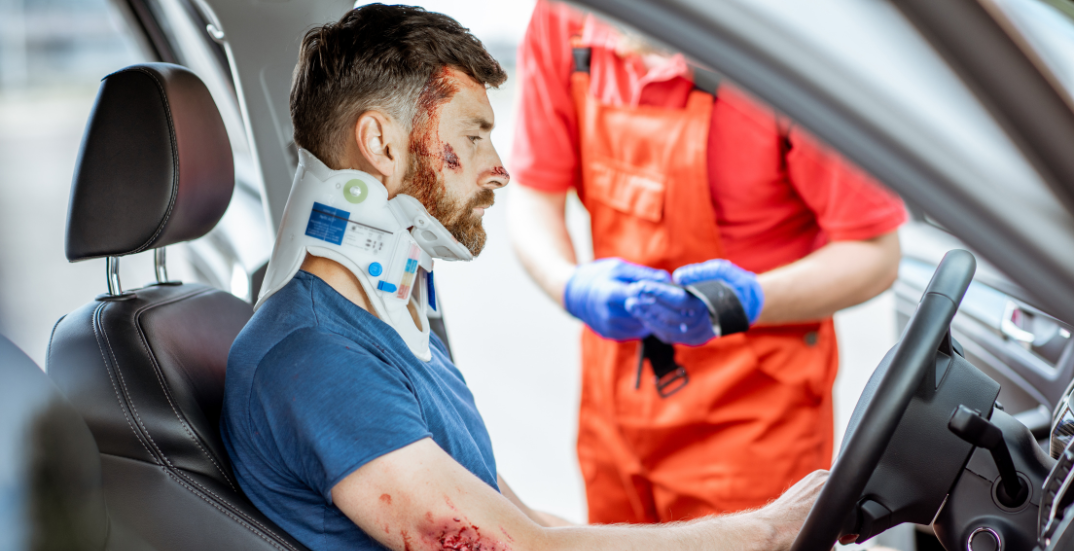
Some car crashes leave you sore for a week. Others change everything, all at once, and forever. A catastrophic injury is different. It means a spinal cord injury, traumatic brain injury, severe burn, amputation, or other harm that can end a career, upend a household, and bring a lifetime of medical bills.

When the stakes are this high, the legal questions stop being academic, which is why families facing this kind of loss often sit down with an experienced New Orleans car accident attorney early, before an insurer’s first offer quietly sets the ceiling on a claim that has to last decades.

This guide explains what makes an injury “catastrophic,” what these injuries cost over a lifetime, how compensation actually works in Louisiana (which is not a no-fault state, despite what you may have read), and the steps that secure both your recovery and your claim.

A catastrophic injury is one with life-altering consequences, often calling for extensive medical treatment and reshaping a person’s ability to work or live independently.

Key Takeaways

  • A catastrophic injury causes long-term or permanent disability and dramatically affects a victim’s ability to work, function, or live independently.
  • Common examples can be spinal cord injuries, traumatic brain injuries, severe burns, and amputations.
  • Compensation can include past and future medical care, lost income and earning capacity, and non-economic damages like pain and suffering.
  • Louisiana is an at-fault state with no PIP, so the claim runs against the at-fault driver, with your own UM/UIM coverage as a backstop.
  • Fault rules changed on January 1, 2026, and, for most crashes since July 1, 2024, you have 2 years to file suit.

What Counts as a Catastrophic Injury?

A catastrophic injury is a severe injury that causes long-term or permanent disability, sharply limiting a person’s ability to work, move, or enjoy daily life. These vary from minor or moderate injuries because they usually demand prolonged treatment, rehabilitation, and lasting lifestyle changes rather than a few weeks of recovery.

The line is not about pain alone. It is about permanence and the way the injury reaches into every part of a life.

Common examples consist of spinal cord injuries that cause paralysis, traumatic brain injuries that bring cognitive or personality changes, and severe burns or amputations that leave disfigurement and chronic pain. What ties them together is the long tail: the costs and the consequences keep coming long after the crash itself is over.

Types of Catastrophic Injuries

The most common catastrophic injuries from car crashes fall into a few categories, each bearing its own lifelong demands. Spinal cord injuries can mean partial or complete paralysis. Brain injuries can rewrite memory and behavior. Severe physical trauma can take a limb. Each one carries a distinct medical and financial future, and each is built into how a claim must be valued.

Spinal Cord Injuries

A spinal cord injury can cause partial or complete paralysis, taking away mobility, independence, and the ability to manage daily life the same way. Many survivors need wheelchairs, ramps, stairlifts, home changes, and ongoing personal care. The injury may be permanent, and the costs can last a lifetime.

Traumatic Brain Injuries

A traumatic brain injury can cause memory problems, trouble thinking clearly, and personality changes that affect work, family, and relationships. Serious cases may require long-term therapy, in-home help, or full-time care. Recovery is often uneven, which is why the long-term impact has to be understood before the claim is valued.

Severe Burns, Amputations, and Orthopedic Trauma

Burns, amputations, and crushed bones can cause disfigurement and chronic pain, and they often demand repeated surgeries, prosthetics, and customized therapy. The physical recovery is only part of it. The change to how a person looks, moves, and works carries its own weight in a damages claim.

What Do Catastrophic Injuries Truly Cost a Family?

The cost goes well beyond the first hospital stay. Families may face permanent loss of function, long-term care, home changes, lost income when the injured person cannot work, and an emotional toll that affects everyone in the household.

Depression, anxiety, and PTSD are common, and they compound the physical recovery. A claim that ignores any of these aspects oftem undervalues the whole.

That is why these cases focus on the future, not just what has already happened. A burn victim may need years of reconstructive surgery. A paralyzed driver may need a modified vehicle and lifelong care. The biggest fight is often over the bills still coming, because that is where much of the real value sits.

Catastrophic injury after car accident

How Compensation Works in Louisiana

Louisiana is an at-fault (tort) state, so the at-fault driver and their insurer are responsible for the harm, and the claim covers economic and non-economic damages.

The right to recover traces to Louisiana Civil Code article 2315, the foundation of state injury law, which provides that “every act whatever of man that causes damage to another obliges him by whose fault it happened to repair it.”

You can read it on the Louisiana legislature’s site. For a catastrophic injury, “repair” means a number large enough to carry a lifetime of consequences.

What Compensation Can Cover

  • Medical expenses, past and future. Surgeries, hospital stays, rehabilitation, medications, assistive devices, and long-term or in-home care. Future care is often the largest single piece.
  • Lost income and earning capacity. Wages already lost, plus the diminished ability to earn going forward when a permanent disability blocks a return to work.
  • Pain and suffering and other non-economic harm. Emotional distress, loss of enjoyment of life, disfigurement, and the daily reality of living with the injury.

Here is how fault can change the numbers: if a catastrophic injury claim is worth $1,000,000 and the injured person is 20% at fault, recovery falls to $800,000. For crashes on or after January 1, 2026, a 55% fault share triggers Louisiana’s 51% bar and leaves recovery at $0.

Same injury, same bills, different result due to the fault split and the crash date. In a case this large, fault can decide the whole claim.

Fault Changed on January 1, 2026

Louisiana splits fault by percentage under Article 2323, and the rule changed in 2026. Before January 1, 2026, you could still recover damages even if you were mostly at fault, with your award reduced by your share. For crashes on or after that date, Article 2323, as amended by HB 431 (2025), adds a 51% bar: if you are 51% or more at fault, you recover nothing; at 50% or less, you can still recover a reduced amount. The police report date decides which rule applies.

Which Insurance Covers a Catastrophic Injury?

In Louisiana, coverage usually starts with the at-fault driver’s liability insurance, not your own. Because Louisiana is a traditional at-fault state with no PIP and no no-fault system, there is no personal-injury-protection policy that pays your bills first regardless of who is at fault. Several sources can come into play, and serious injuries often blow past a single policy’s limits, so finding every layer matters.

  • The at-fault driver’s liability insurance. The primary source pays for the harm their driver caused, up to the policy limits.
  • Your own uninsured/underinsured motorist (UM/UIM) coverage. When the at-fault driver has too little insurance or none, your UM/UIM coverage can fill the gap. For a catastrophic injury, this coverage is often what stands between a family and an unpaid balance.
  • Health insurance. Covers medical bills but may seek reimbursement from your settlement, and may have limits or gaps.
  • Disability insurance. It can replace some income if you cannot work, separate from the injury claim itself.

Sorting through several policies at once is complicated, and the order in which they pay affects how much you keep. A lawyer can map the coverage and pursue each layer so nothing is left on the table.

Insurance coverage for catastrophic car injuries

Steps to Take After a Catastrophic Injury Crash

When the injuries are severe, medical care comes first, but the early record matters too. Get emergency treatment right away and follow through with every visit, because the medical record becomes the backbone of the claim.

If you cannot gather proof yourself, ask a family member to photograph the scene and vehicles.

Preserve anything from the scene or vehicles. Do not apologize or take any kind of blame. Stick to the facts. The goal is simple: protect your health first, then protect the proof before it disappears.

Damage type What it covers Why it matters in a catastrophic case
Past medical care ER, surgery, hospital stay, early rehab Documented and easiest to prove
Future medical care Long-term care, devices, modifications, future surgeries Often the largest part of the claim
Lost income Wages already lost Direct, calculable loss
Lost earning capacity Reduced ability to earn going forward Critical when disability blocks a return to work
Non-economic damages Pain, suffering, disfigurement, lost enjoyment Reflects the human cost the bills don’t show

Frequently Asked Questions

What does “catastrophic” mean in a personal injury case?

It refers to a severe injury with permanent or life-altering consequences, the kind that significantly limits a person’s ability to work, function, or live independently.

Examples include spinal cord injuries that can cause paralysis, traumatic brain injuries, severe burns, and amputations. These injuries typically require long-term or lifelong care.

Does Louisiana have PIP or no-fault coverage for catastrophic injuries?

No. Louisiana is a traditional at-fault (tort) state with no personal injury protection (PIP) and no no-fault system.

Your claim runs against the at-fault driver and their liability insurer. If that driver is uninsured or underinsured, your own UM/UIM coverage can help fill the gap, especially for high-cost injuries.

What compensation can a catastrophic injury victim recover?

Recovery may include past and future medical bills, lost income, reduced earning ability, and damages for pain, suffering, disfigurement, and loss of normal life.

In catastrophic cases, future medical care and lost earning capacity are often the largest components, which is why valuing the future accurately is essential.

How does fault affect a catastrophic injury claim in Louisiana?

Louisiana assigns each party a percentage of fault. For crashes before January 1, 2026, pure comparative fault applied, so you recovered reduced by your share even if mostly at fault. For crashes on or after that date, a 51% bar applies: at 51% or more fault, you recover nothing, and at 50% or less, you recover, reduced by your percentage.

How long do I have to file a catastrophic injury claim in Louisiana?

For crashes on or after July 1, 2024, you generally have two years from the date of injury, under Louisiana Civil Code article 3493.1. For crashes before that date, the older one-year deadline usually applies. Given how long catastrophic cases take to develop, it is wise to involve a lawyer far before the deadline approaches.

Get Your Free Consultation

Talk to a New Orleans Catastrophic Injury Attorney

A catastrophic injury claim is not a routine car accident case. The numbers are large, the future costs are uncertain, and an insurer has every reason to settle low and fast before anyone calculates what a lifetime of care really costs.

Getting the value right and proving fault is the whole job. Charbonnet Law Firm has recovered results for injured clients in personal injury matters (reported recoveries include amounts such as $200,000, $275,000, and $315,000) and has recovered millions in settlements over the years. Past results do not guarantee a similar outcome; each case is unique.

Our attorneys have represented injured people across New Orleans for three generations, and the consultation is free, so there is no cost to getting a clear read on what your claim is worth and how Louisiana’s fault and deadline rules apply. For most crashes since July 1, 2024, the deadline to file is 2 years; for older crashes, it is 1 year. If you or someone you love is facing the aftermath of a serious injury, connect with us at (504) 888-2227 while there is still time to act.

With over 50 years of legal experience serving families in the New Orleans area and surrounding Louisiana communities, our firm takes pride in providing clients with personalized legal services tailored to individual needs.


  • “I walked in as a client and walked out as a friend. If you are good at what you do, you will never need expensive ads to prove it. Good outshines the rest and in volatile times such as now always go for the good and at Charbonnet Law Firm you will be treated as humans and not just a case file. It’s my word of mouth endorsement and I approve this message.”

    A. Bajaj

  • “It’s easy to get caught up in lies. These days it’s hard to weed out good from bad. The best endorsement is what comes from people, not the lawyers’ own endorsements, paid celebrity endorsements or actors telling you they made millions. Charbonnet law firm has no expensive ads because they have happy clients. I am one of them!”

    J. Kelly

  • “If I had to sum it up in short Charbonnet Law Firm has a team that treats everyone with respect and esteem. Kindness is apparent as soon as you walk into the office, don’t be just a case number! I am not just saying it I am a client too!”

    B. Smith

  • “Best Firm in New Orleans. Great service. These guys treated me like family whenever I got in a tight situation. Clean office and great location in the Metairie area.”

    Q. Lee

SCHEDULE A FREE
Consultation

Home contact Form